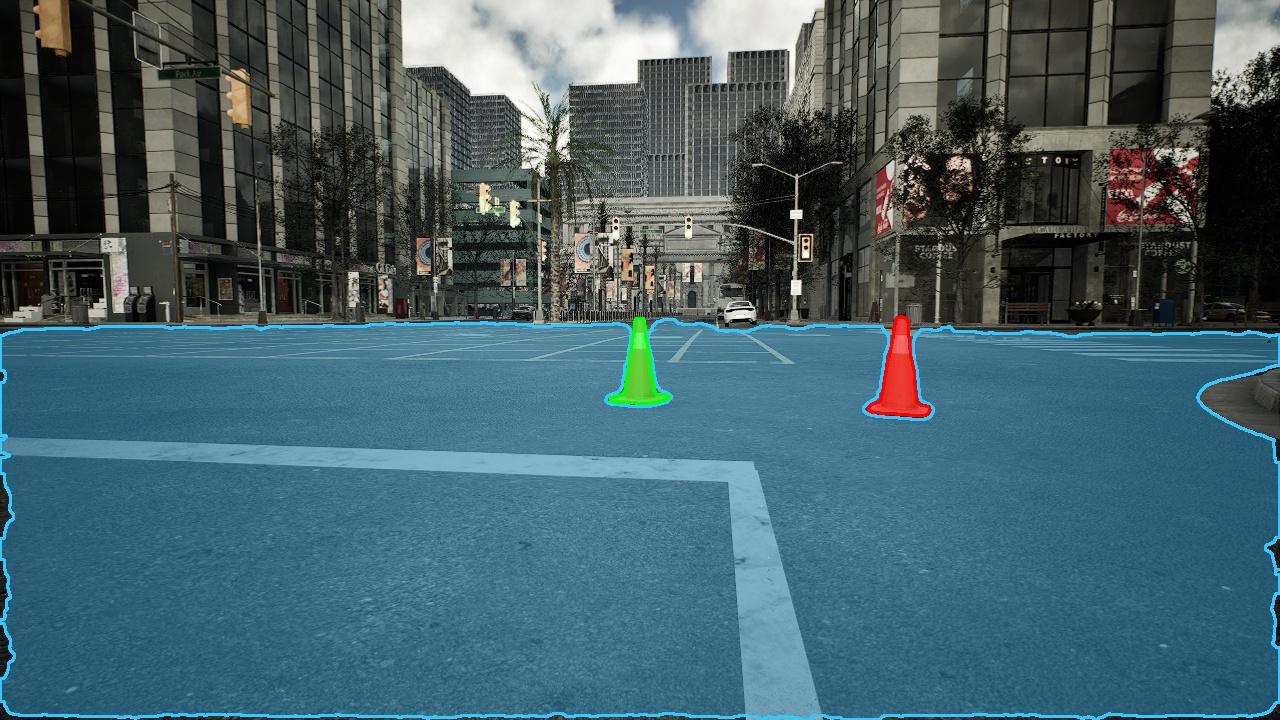
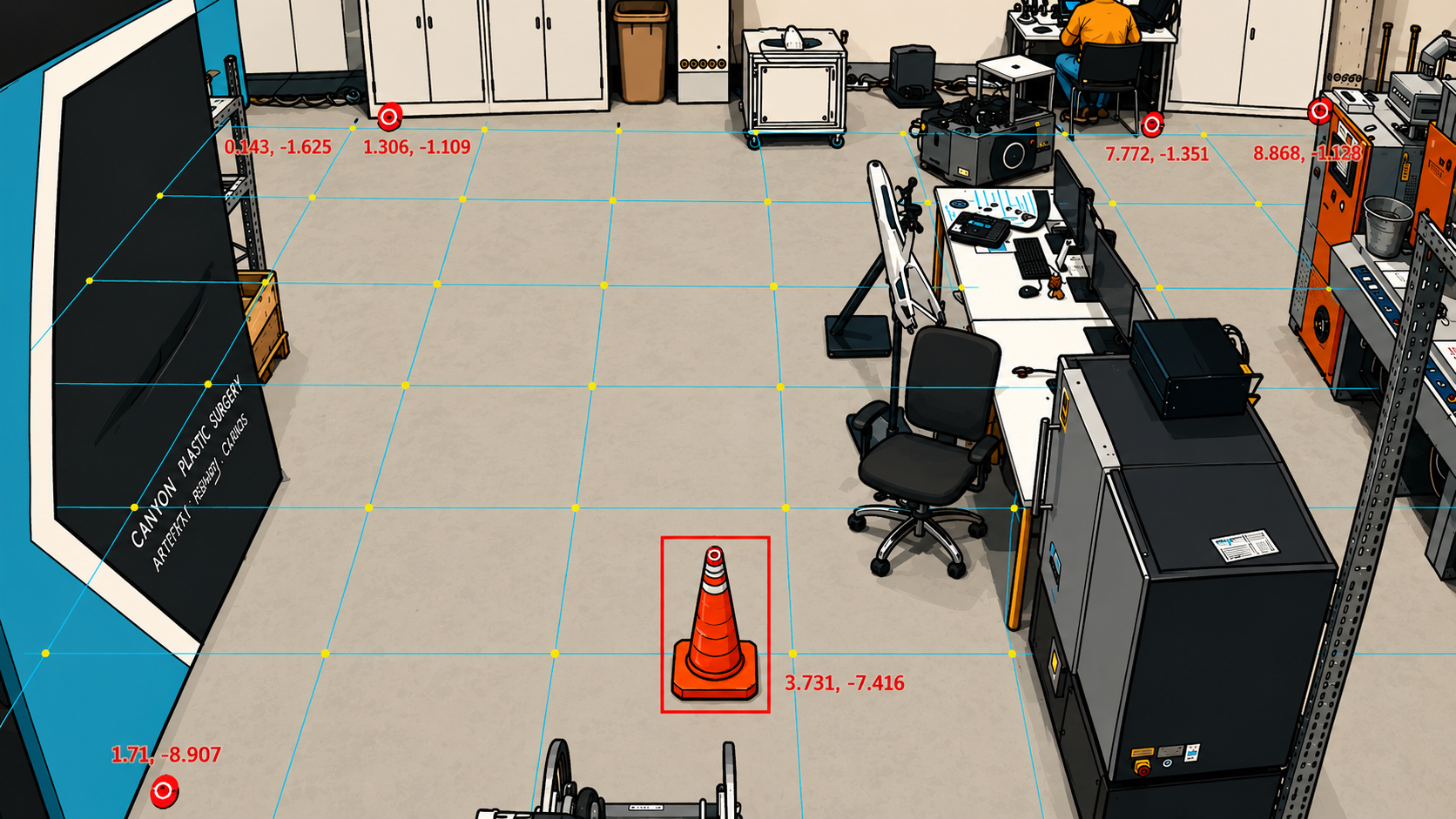
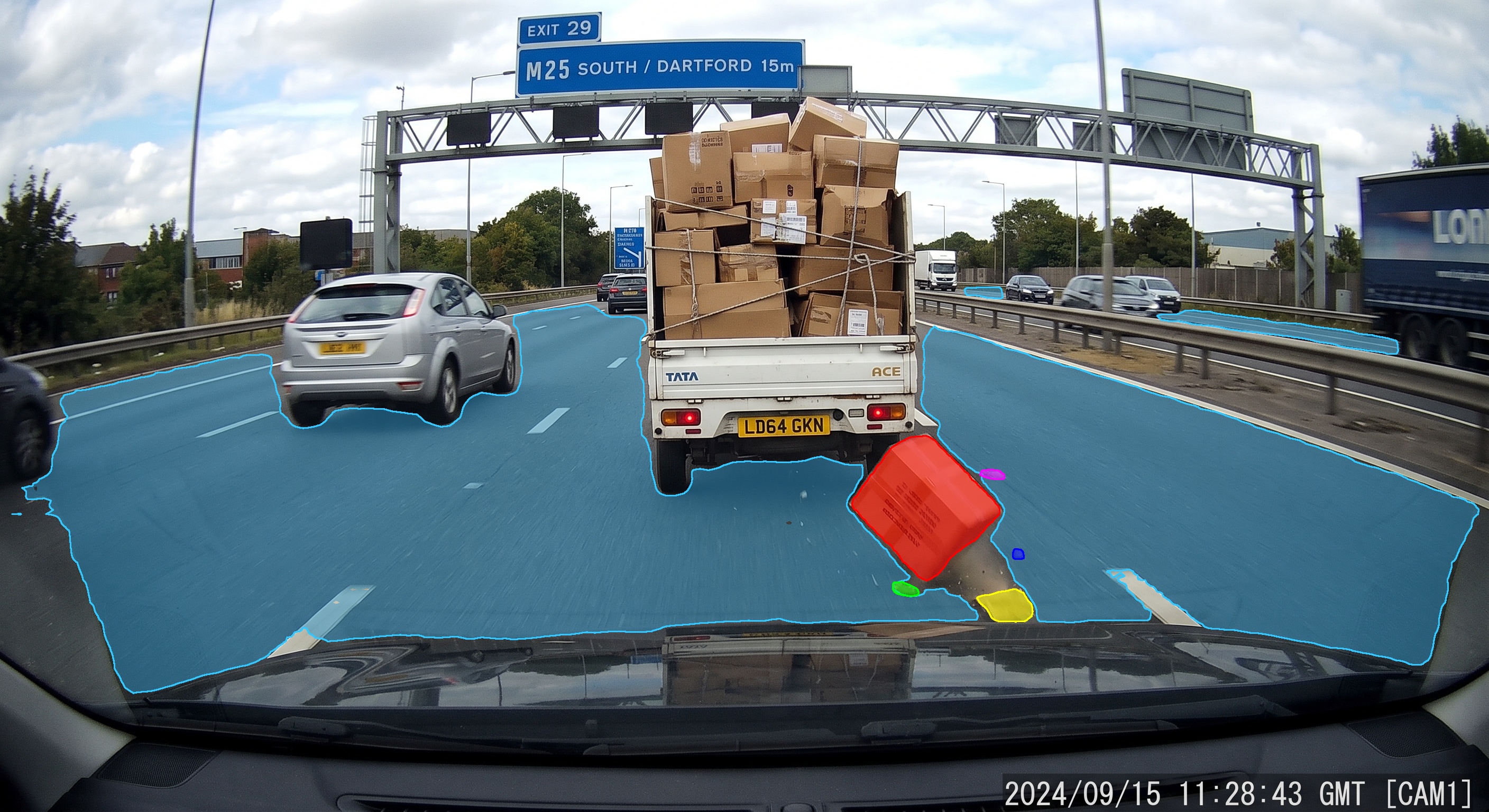
One engine, two paths. Path A reasons about a scene in plain language and needs no training at all. Path B renders your own objects in simulation and trains a detector on the result. Every solution we ship runs on one of the two.
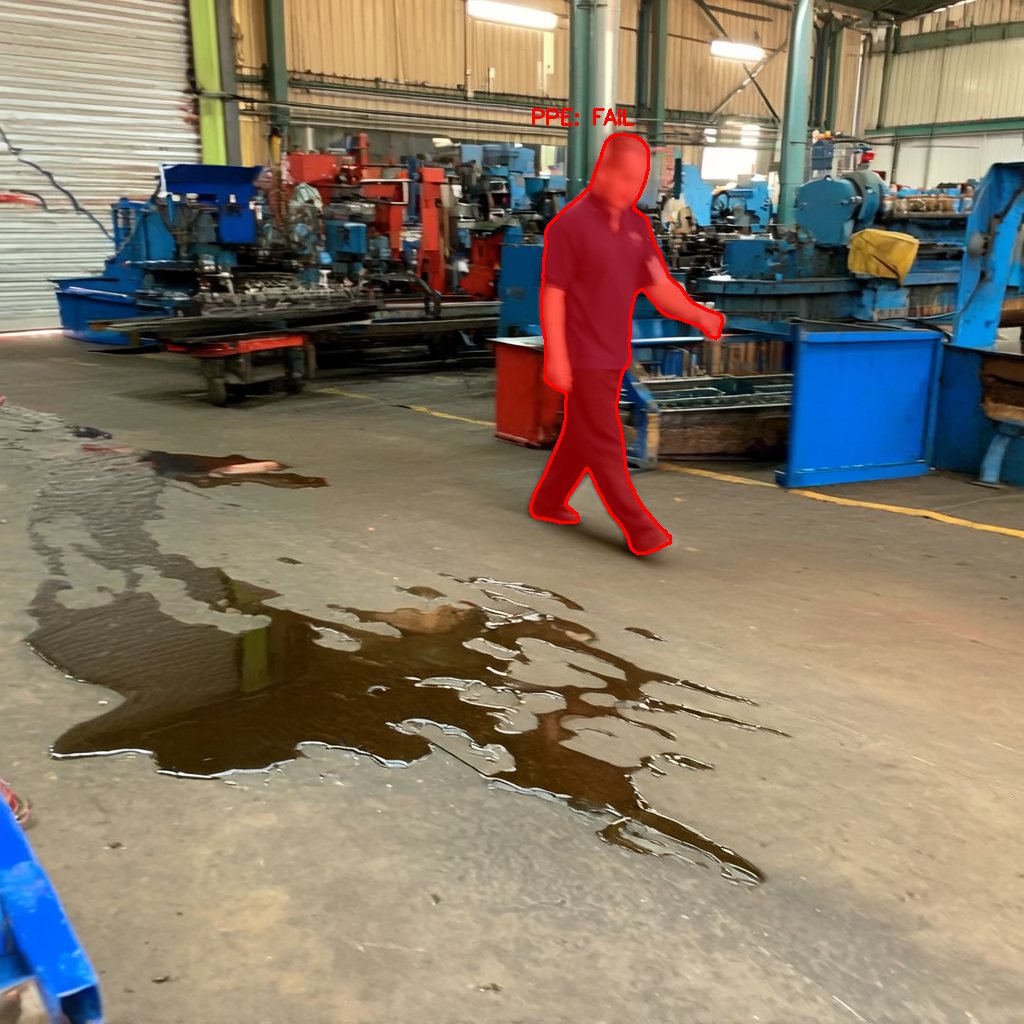
A scene model looks at the frame and says what matters in words. A promptable segmenter turns those words into pixel masks. Geometry turns masks into zones a machine can act on. No dataset, no training, and a hazard you have never mentioned is a sentence away. Run it on the demo →
When the thing you need to detect is not in any vocabulary, or has to run in a few milliseconds on an edge box, we build it a detector. The object is digitised, dropped into a simulator, rendered under every condition with its labels written by the renderer, and a model is trained and benchmarked on that set. Four stages, every one automated.
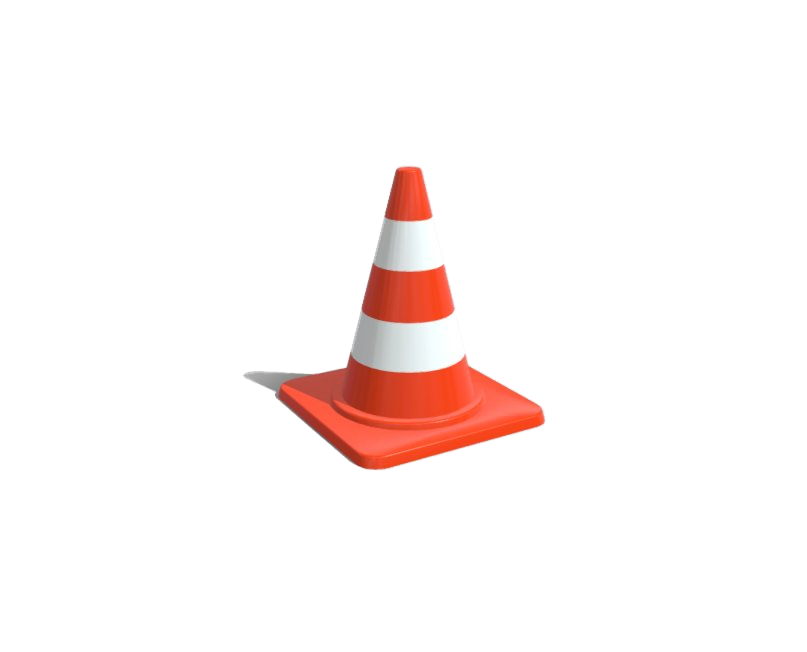
We create high-fidelity 3D models, reconstructed from sources like camera imagery, 3D modeling software, and point-cloud scans. These aren't just meshes. They carry physically accurate materials, textures, and reflectance properties, packaged as OpenUSD assets. That means any object can drop straight into a simulator like CARLA or Omniverse and be rendered under any lighting condition to generate synthetic data.
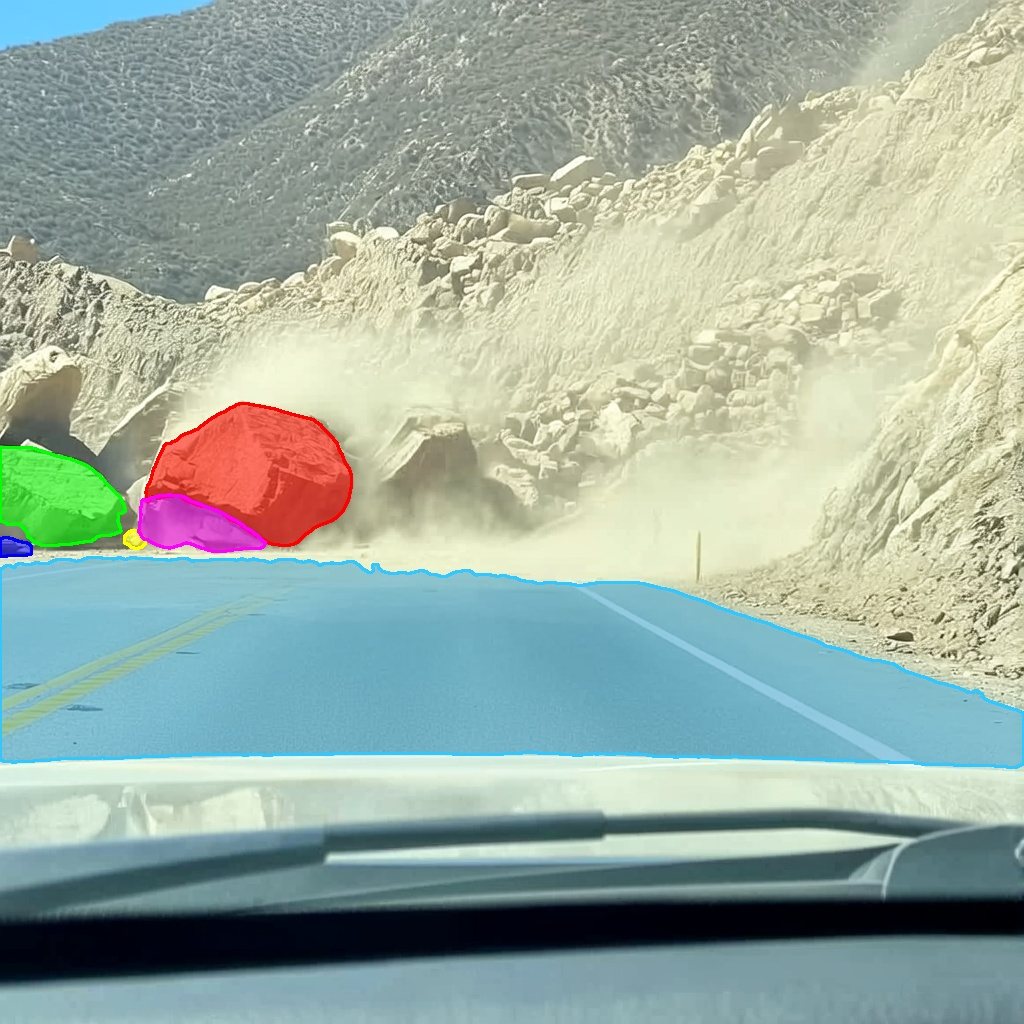
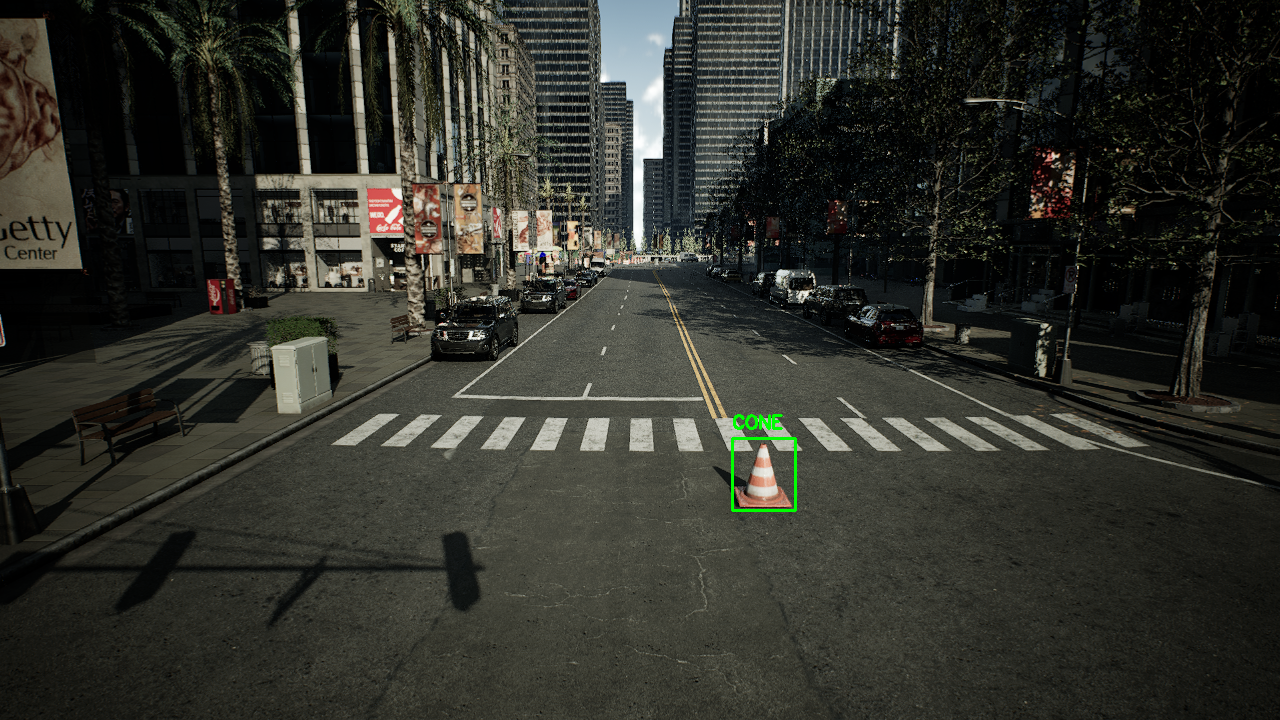
Once in CARLA and NVIDIA Omniverse, those assets are placed in varied scanrios like indoor factory, road, or tunnel environments with randomized lighting, camera angles, occlusions, and backgrounds. That includes rare road events like falling cargo that no fleet could ever film. Every frame is auto-labeled at render time, giving pixel-perfect segmentation masks for every object and surface, with bounding boxes derived for free.
The rendered frames feed a single pipeline that adapts to whatever a customer needs, whether that's detecting objects and locating them, or reading a whole scene at the pixel level to map drivable space and flag anything that does not belong. The same synthetic ground truth trains both. And because the models learn entirely from synthetic data, they carry straight over to real cameras. No annotation teams. No labeling bias.
The trained model runs against live camera feeds, whether the camera is fixed or moving. Every detection is placed in a real-world frame of reference, so a hazard is not just recognized but located, then passed to the safety systems already in place. One pipeline, one model family, adaptable to very different deployments.
Every component is widely used, well-supported, and battle-tested. No proprietary lock-in, no obscure dependencies.
Synthetic-data pipelines are GPU-heavy at every stage. The numbers below are the order of magnitude we're working at today, and where 2026 is heading.
Rendering photoreal training frames in Omniverse. Every object class needs broad coverage across lighting, weather, and angle.
10k+ scenes / classTraining detectors and segmentors on the rendered datasets. Multi-GPU runs to converge on each new hazard class and condition mix.
100k+ synthetic framesWe're scaling from cones (live) and road debris (prototype) toward a hazard library covering factory safety, road infrastructure, etc.
N+ classes planned ’26